
A reliable cardboard display stand manufacturer helps brands develop retail displays for supermarkets, retail stores, exhibitions, and promotional spaces. When choosing a custom display stand supplier, brands should evaluate whether the manufacturer understands product display, structural design, material selection, production control, sampling, printing, inspection, packing, and export delivery.
Design and Development Capability
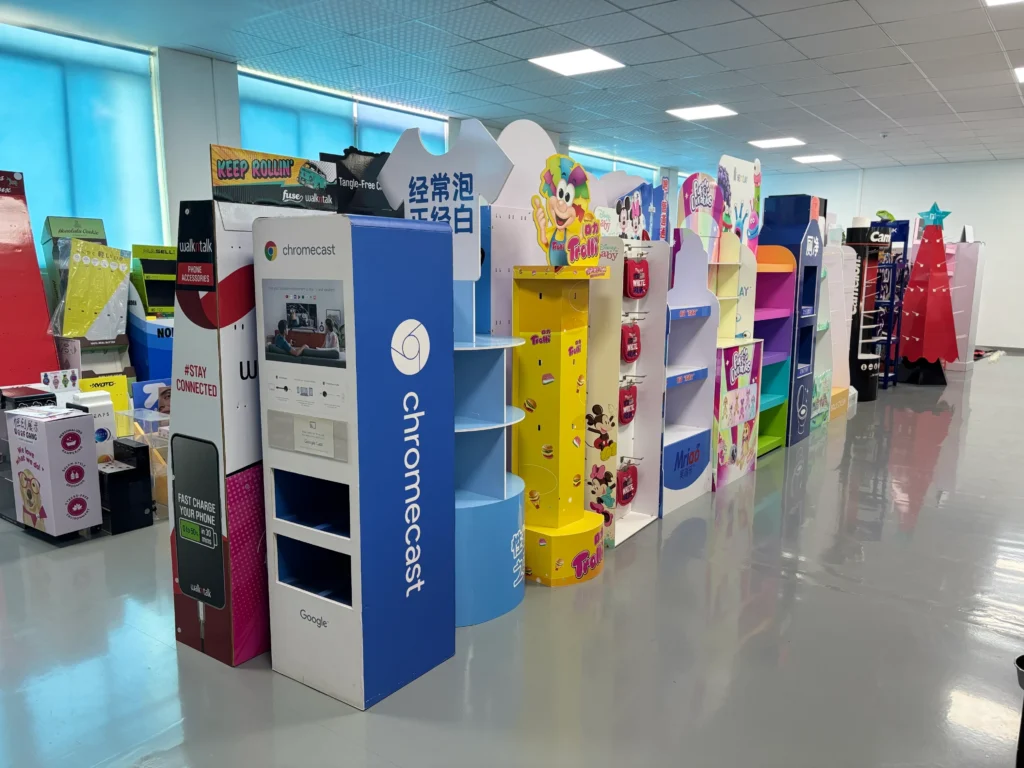
Design and development capability shows whether the manufacturer can turn product information, brand requirements, and retail conditions into a practical display structure. This capability helps brands reduce sample revisions, improve display stability, simplify store assembly, and prepare the project for mass production.Brands can also review whether the supplier has experience with different cardboard display stand types, such as floor display stands, counter display stands, hook display stands, dump bin displays, and pallet displays.
Brands should evaluate how the supplier collects project information, designs the structure, tests the sample, and adjusts the display before production.
- Product information review
The supplier should confirm product size, weight, display quantity, retail location, artwork requirements, assembly method, and packing needs before starting the design. - Structure and load-bearing design
The design team should review shelf spacing, product placement, load-bearing strength, display stability, and packing volume according to the actual product. - Sample testing and adjustment
The manufacturer should test product placement, assembly method, and structural strength during sampling. It should adjust the structure before mass production. - Production feasibility check
The supplier should check whether the design matches printing, die-cutting, folding, assembly, packing, and shipping requirements.
Material Application Experience
Material application experience shows whether the manufacturer can choose the right material for product weight, display life, store environment, and budget. This capability helps brands control cost, improve display strength, and match the display structure with real retail use.
A custom display stand supplier should understand corrugated cardboard, honeycomb board, PVC foam board, acrylic, and mixed-material structures. It should also understand how each material performs during printing, laminating, die-cutting, mounting, assembly, packing, and transportation.
- Material recommendation
The supplier should recommend materials according to product weight, display period, retail environment, transportation method, and cost target. - Corrugated cardboard application
Corrugated cardboard display stands work well for retail promotions, product launches, supermarket displays, and seasonal campaigns. The supplier should choose suitable flute type, thickness, and reinforcement method. - Reinforced structure option
For heavier products or longer display periods, the manufacturer should provide stronger structures or alternative materials, such as honeycomb board, PVC foam board, acrylic, or composite materials. - Printing and finishing compatibility
The supplier should match the material with printing, surface treatment, folding lines, glue areas, and assembly requirements.
Production Capability
Production capability shows whether the manufacturer can turn an approved sample into stable batch production. This capability helps brands keep project schedules under control, maintain consistent display quality, and support repeat orders.
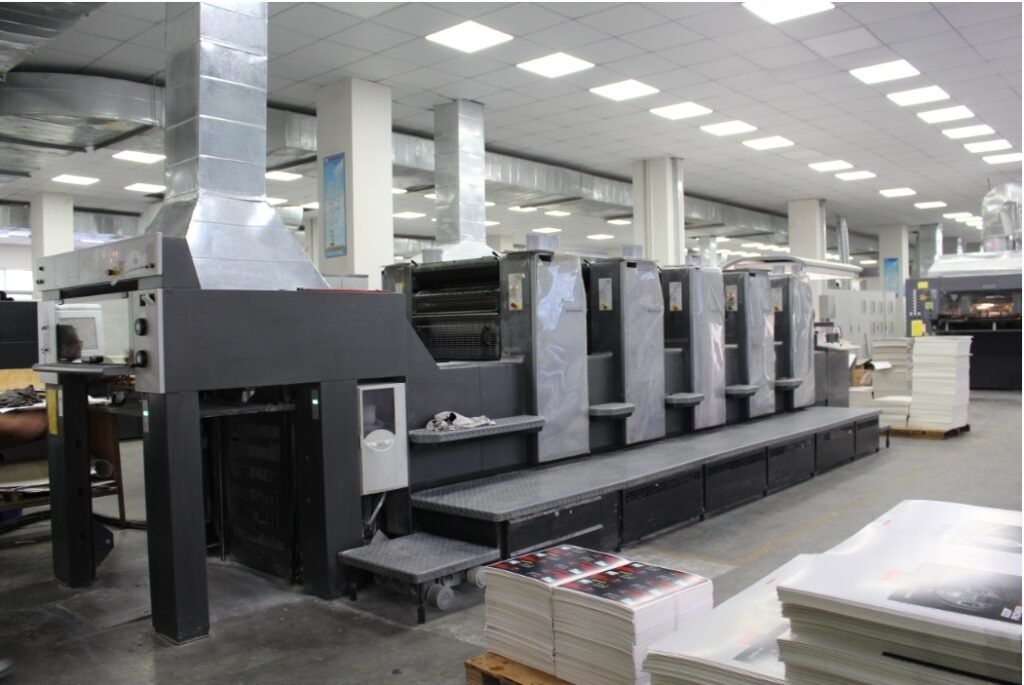
Brands should check the supplier’s factory, equipment, workers, process flow, production capacity, and lead time control. A cardboard display stand factory usually manages printing, laminating, die-cutting, mounting, folding, assembly, inspection, and carton packing.
- In-house factory control
Brands should check whether the supplier owns its production facility and controls key production steps directly. - Production process management
The factory should confirm artwork files, material thickness, color standards, structural dimensions, approved samples, packing quantity, and shipping marks before mass production. - Batch consistency
The supplier should keep color, size, structure, assembly method, and packing standard consistent across the full order. - Repeat order support
The manufacturer should keep project records, material standards, artwork files, and sample references for repeat production.
Quality Control Process
Quality control capability shows whether the manufacturer can keep cardboard retail displays aligned with the approved sample and store-use requirements. This capability helps brands reduce printing issues, size deviation, assembly problems, weak structures, and packing damage before shipment.
Brands should check whether the supplier has clear inspection standards for raw materials, printing, structure, assembly, finished products, and export packing.
- Material inspection
The factory should check cardboard strength, thickness, surface condition, and material consistency before production. - Printing and color checking
The supplier should check color accuracy, surface finish, artwork position, and printing cleanliness during production. - Structure and assembly testing
The quality team should check die-cut accuracy, folding lines, shelf strength, glue position, accessories, and assembly performance. - Packing inspection
The supplier should check carton strength, product protection, packing quantity, shipping marks, and final shipment condition.
Communication and Project Management Ability
Communication and project management ability shows whether the supplier can move the custom display stand project from inquiry to delivery with clear coordination. This capability helps brands reduce misunderstanding, shorten communication time, and keep design, production, packing, and shipping aligned.
A capable project team should confirm details in writing, ask precise questions, provide practical suggestions, and update progress at key stages.
- Requirement confirmation
The supplier should confirm product details, display goals, dimensions, materials, artwork files, order quantity, packing method, lead time, and shipping plan. - Sample and revision management
The project team should record sample comments, confirm revisions, and update drawings or specifications before production. - Production progress updates
The supplier should provide updates during material preparation, printing, production, inspection, packing, and shipment. - International coordination
For overseas projects, the manufacturer should handle file confirmation, time zone communication, export packing, shipping documents, and delivery arrangements.
Export Experience
Export experience shows whether the manufacturer can support overseas brands with packing, shipping, and delivery requirements. This capability helps brands improve loading efficiency, control logistics cost, protect printed surfaces, and receive displays ready for store assembly.
Cardboard display stands usually take large shipping volume. An experienced export display stand manufacturer should consider flat-pack structure, carton size, product protection, container loading, shipping marks, and documents during the project.
- Flat-pack design
The supplier should design the display structure for efficient packing, lower shipping volume, and easy store assembly. - Export packing solution
The manufacturer should use suitable cartons, inner protection, packing methods, and labeling for international transportation. - Shipping document preparatio
The supplier should prepare commercial invoices, packing lists, shipping marks, and other export documents according to the delivery requirement. - Overseas project experience
Brands should check whether the manufacturer has handled similar cardboard display stand projects for international customers and retail markets.
Conclusion
Brands can evaluate a cardboard display stand manufacturer through six areas: design and development capability, material application experience, production capability, quality control process, communication ability, and export experience.
A suitable manufacturer understands product display, retail application, production details, packing requirements, and international delivery. These capabilities help brands develop cardboard display stands that fit their products, support retail presentation, stay stable during production, and arrive safely for store use.